
On this page
Digital Marketing Services for Tech Companies: What to Do First
This guide is for founders and marketing leads at B2B, SaaS and D2C companies who are choosing a marketing partner, or deciding what to fix before they hire one. The short answer: get measurement and your website's technical foundations right first, then add channels one at a time, and judge every channel by leads and revenue rather than traffic.
Most tech companies are not short on marketing activity. They are short on clarity about which activity produces pipeline. Budget is rarely the real constraint. Sequence and measurement usually are.
Below: the order we would work in, what each channel is good for, what to ask an agency, and how to measure results honestly.
Start with measurement, not channels
Before spending on SEO, ads or content, make sure you can answer three questions: where do leads come from, which of them become customers, and what does a customer cost to acquire?
A practical minimum:
- Conversion tracking that matches your business. For B2B, that means demo requests, contact forms and booked calls, not page views. For D2C, it means purchases, add-to-cart and checkout steps.
- GA4 and Google Search Console connected, with key events defined and tested.
- CRM stage data. A lead that never becomes an opportunity is not worth the same as one that does. Pass the lead source into your CRM so you can report on pipeline, rather than only form fills.
- A "how did you hear about us?" field on forms and during sales calls. It is blunt, but it catches word of mouth, podcasts, communities and AI assistants that analytics will file under "direct".
Once this exists, every later decision gets easier because you are arguing from your own data.
Working on something like this? Talk it through with the team that builds it.
Which channel does what
No channel is best in the abstract. Each does a different job at a different speed.
| Channel | Best for | Speed | Main risk |
|---|---|---|---|
| SEO and content | Compounding, lower cost per lead over time | Months | Publishing content nobody searches for or needs |
| Being cited in AI answers (AI Overviews, assistants) | Visibility where people ask questions | Months | Treating it as a trick; Google says it needs no special optimisation beyond good SEO |
| Paid search | Capturing existing demand quickly | Days to weeks | Paying for clicks that never reach a sales conversation |
| Paid social | Creating demand, retargeting | Weeks | Optimising for cheap clicks over qualified leads |
| Conversion rate optimisation (CRO) | Getting more from traffic you already have | Weeks | Testing trivia instead of the offer and the page |
| Email and lifecycle | Retention, upsell, reactivation | Weeks | Sending to an unsegmented list |
For most tech companies the first two quarters should be SEO foundations, CRO on the pages that already get traffic, and one paid channel with a tight budget cap. Adding five channels at once makes it impossible to learn anything.
Technical SEO foundations
A fast, crawlable, well-structured site is the base everything else sits on. A good audit covers:
- Crawling and indexing. Are the pages you want ranked actually indexed? Check the Page indexing report in Search Console for exclusions, duplicate canonicals and accidental noindex tags.
- Core Web Vitals. Google reports LCP, INP and CLS. Slow, shifting pages frustrate visitors, which costs conversions directly.
- Rendering. If your site is a client-side JavaScript app, confirm that search engines and AI crawlers can see your main content. Server-rendered or statically generated pages, as in Next.js or Astro, avoid most of these problems. Our web development service covers this when a rebuild is the right fix.
- Structured data. Mark up articles, products, organisation details and breadcrumbs where they genuinely appear on the page. It helps search engines understand the page and does not guarantee rich results. FAQ markup in particular is no longer worth adding for its own sake, as Google has reduced and then deprecated FAQ rich results.
- Internal linking. Link your service pages, comparison pages and case studies to each other with descriptive anchor text, so authority flows to the pages that earn revenue.
- A clean sitemap and robots.txt, with no accidental blocks on important sections.
Search now includes AI answers
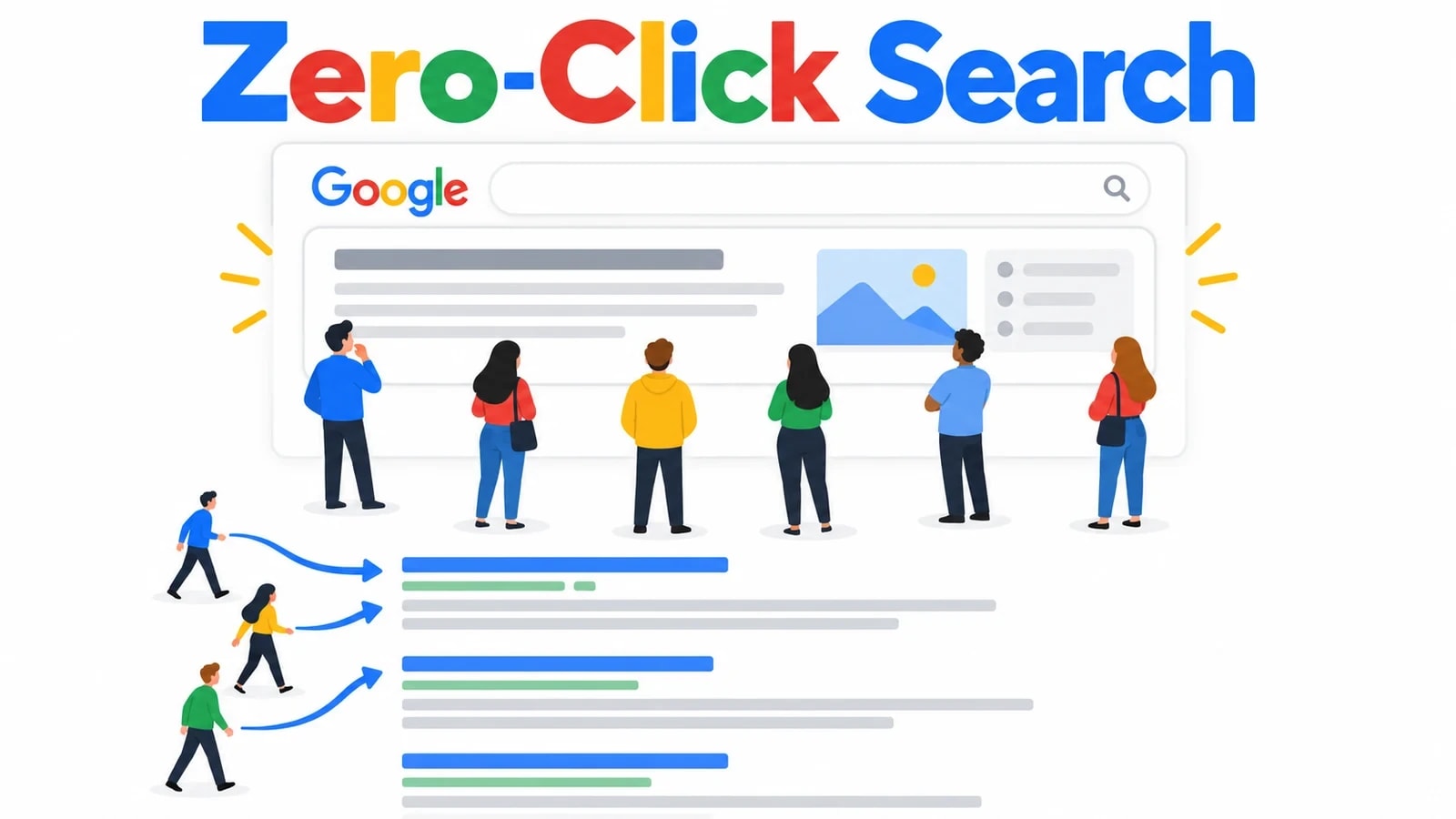
Searches increasingly end with an AI-generated summary or an assistant's answer. That changes what "visibility" means. You can be cited without being clicked, and clicked less often for informational queries.
What helps in both classic and AI search is largely the same: pages that answer a specific question clearly, original information, and a site that is easy to crawl. Google's guide to generative AI features says no special files, markup or content chunking is needed for them, beyond standard SEO good practice, and its people-first content guidance asks who wrote a page, how, and why.
We cover the mechanics in separate guides: SEO for AI Overviews and the zero-click search strategy. The short version for planning: invest in content only you can write (your data, your product experience, your customers' problems) and measure conversions rather than only sessions.
Conversion rate optimisation
More traffic into a weak page is an expensive way to grow. CRO is often the fastest return because it works on traffic you already pay for.
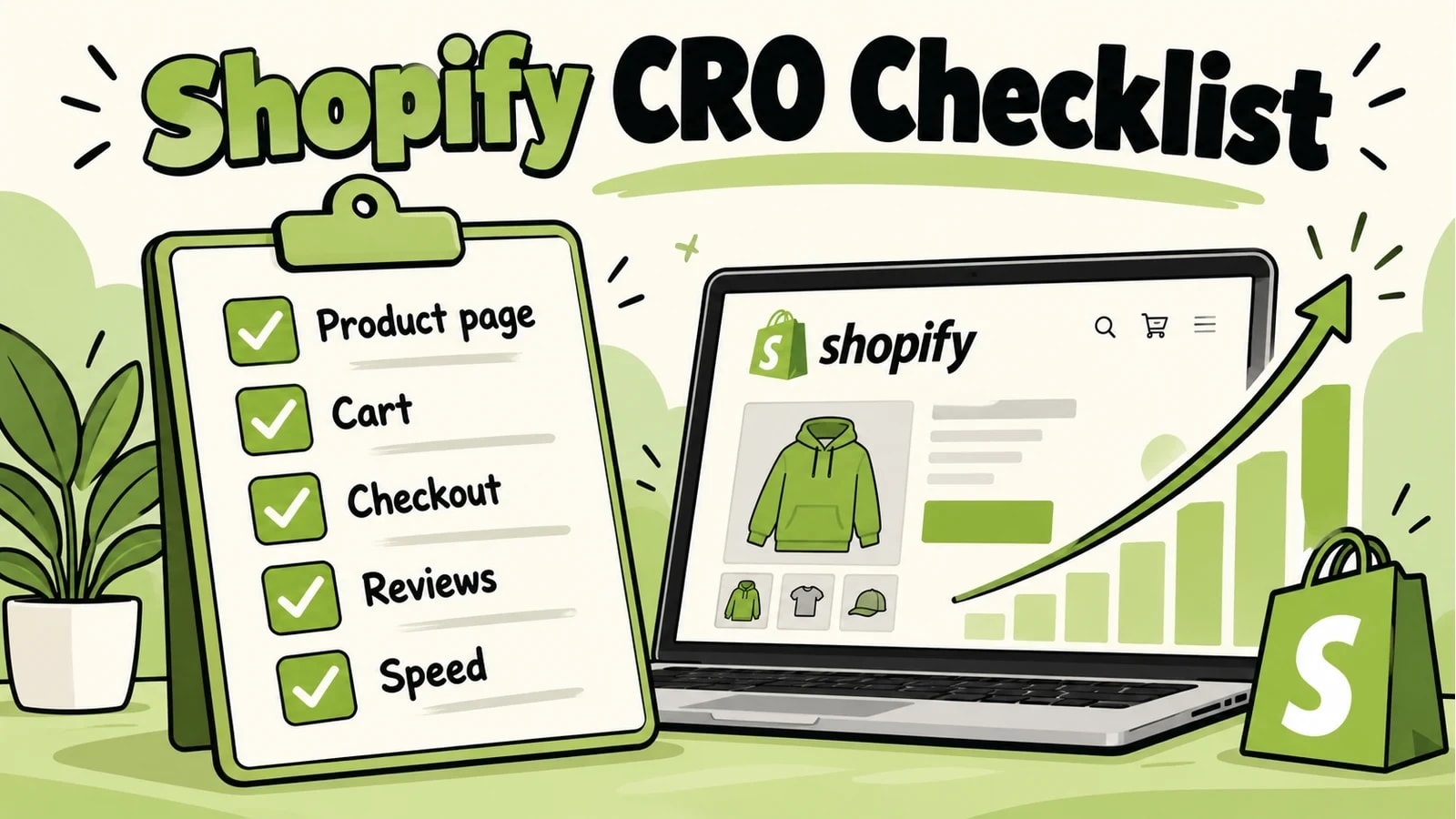
For SaaS and B2B sites, the usual wins are a clearer headline and offer, one primary call to action per page, proof placed near the decision point (case studies, specifics, security information), shorter forms and faster pages. For online stores, they are product page structure, cart and checkout friction, upsells and trust signals.
One D2C store we worked with went from about ₹5,000 a month to ₹3,00,000 in a quarter; the case study explains what changed. Results vary with the starting point, so treat it as an example of the process, not a promise. If you run on Shopify, see our Shopify development and CRO page.
First-party data, personalisation and retention
Third-party cookies are restricted in some browsers and privacy law limits tracking in many markets, so planning around data you collect yourself is sensible.
- Collect it with consent and a reason. Newsletter sign-ups, product usage, purchase history and form answers are all first-party data. Tell people what you do with it.
- Personalise simply first. Segment by industry, lifecycle stage or product used before reaching for predictive models. A relevant email to three segments beats a generic one to everyone.
- Treat retention as marketing. For SaaS and subscription businesses, onboarding emails, usage nudges and win-back flows are often cheaper than acquiring new customers. Track churn and expansion next to lead volume.
- Check the rules that apply to you. Privacy law differs by market, for example the NZ Privacy Act 2020, GDPR and CCPA/CPRA. Work with your legal adviser on consent and retention.
Attribution without false precision
Last-click reports overcredit the final touch and undercount podcasts, communities, LinkedIn posts and AI assistants. You will never have perfect attribution, but you can get good enough:
- Use platform and GA4 data for trend direction.
- Add self-reported attribution on forms and calls.
- Track branded search volume in Search Console as a proxy for awareness.
- Review pipeline and revenue by source monthly with sales.
- Run occasional holdout or geo tests for large paid budgets.
When these views disagree, that is information, not a failure of tracking.
How to choose a digital marketing partner
Ask these before you sign:
- Which metrics will you report on, and will they include qualified leads and pipeline as well as traffic and rankings?
- Who actually does the work, and can I speak to them?
- How do you handle technical SEO? Can you or a developer implement fixes, or do you only send recommendations?
- Can you show a relevant case study with a clear before and after, and say what you did not control?
- What do you need from us, and what happens in the first 30, 60 and 90 days?
- Do I own the ad accounts, analytics properties and content?
Red flags include guaranteed rankings, secret methods, reports full of impressions, long lock-in contracts and no questions about your sales process.
A reasonable first 90 days: month one for tracking, audit and keyword and intent mapping; month two for technical fixes, page improvements and the first content or campaign; month three for reviewing real lead data and deciding what to scale. Our digital marketing service follows this shape, and our SaaS SEO case study shows how it applies to a software product.
Frequently asked questions
How long does it take to see results from SEO?
Usually several months for meaningful growth, and longer in competitive niches. Technical fixes and improvements to existing pages can show movement sooner. Anyone promising a specific ranking date is guessing.
Should I start with SEO or paid ads?
If you need leads in weeks, paid search captures existing demand faster. If you can wait, SEO compounds and lowers cost per lead over time. Many teams run a small paid budget while SEO builds, and use the paid keyword data to guide content.
How much should I spend on digital marketing?
There is no universal figure. Set a budget from your target customer acquisition cost and the revenue per customer, start small on each channel, and increase spend only where the data shows qualified leads.
If you want a second opinion on your tracking, site and channel mix, book a free discovery call and we will walk through what we would fix first.
Sources
- Creating helpful, reliable, people-first content (Google Search Central).
- Optimizing for generative AI features on Google Search (Google Search Central).
- Changes to HowTo and FAQ rich results (Google Search Central; FAQ rich results were later deprecated).
- Core Web Vitals (web.dev).
Written by the Futurise Solutions team. We use AI tools to help with research and drafting; our team edits each article and checks figures and regulatory details against the sources linked in it. Spotted something wrong? Email us.