On this page
E-E-A-T Explained: Why Your Traffic Dropped and What to Fix
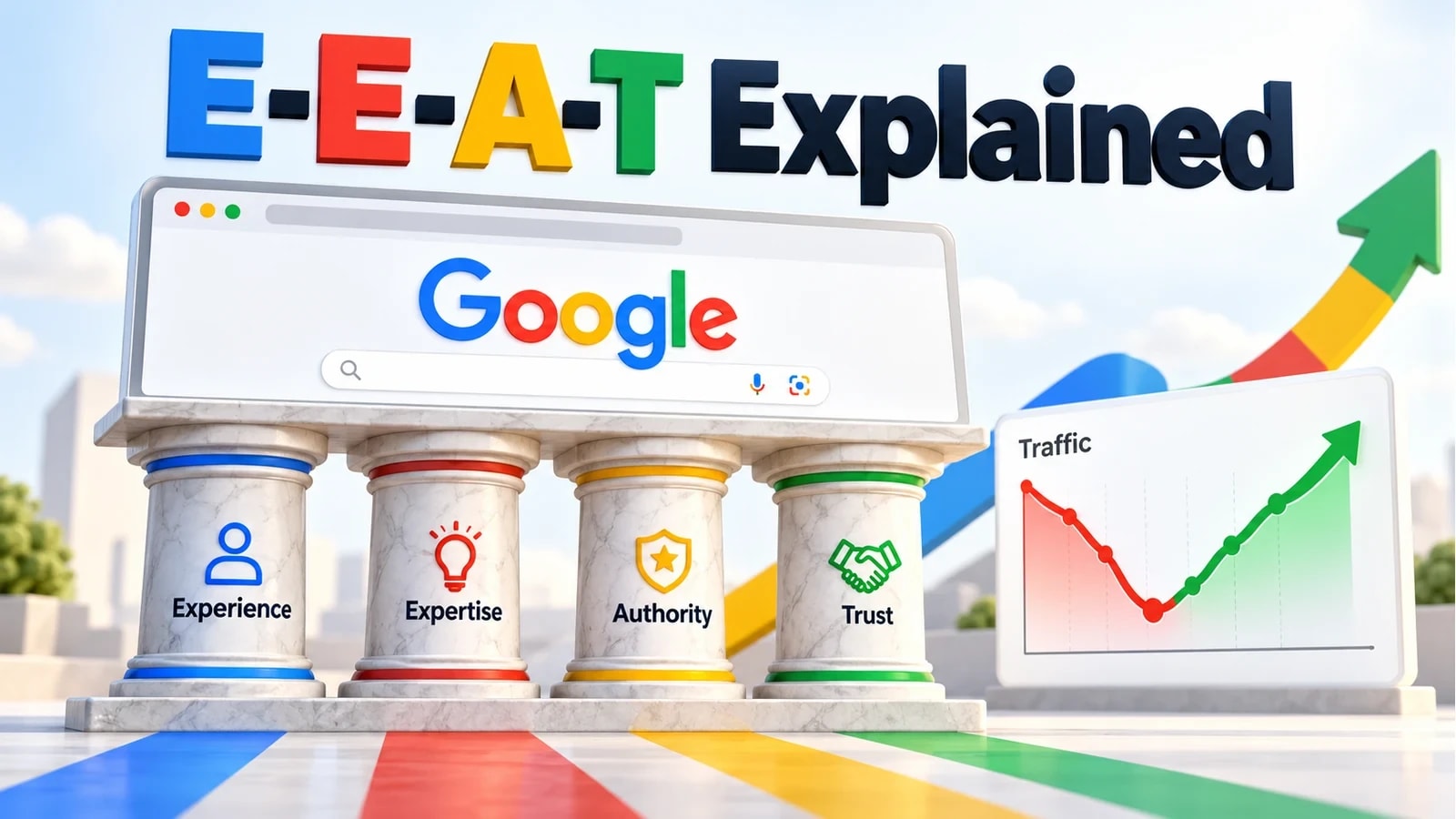
This guide is for site owners who lost organic traffic and have been told it was "the E-E-A-T update". There is no such update. E-E-A-T (Experience, Expertise, Authoritativeness, Trust) is a framework in Google's Search Quality Rater Guidelines, which human raters use to evaluate search results. It is not a single ranking algorithm, and it is not a switch Google turned on in 2026.
That does not mean E-E-A-T is irrelevant. Google's guidance on helpful, reliable, people-first content uses E-E-A-T as a way to think about content quality, and says trust is the most important element. If your traffic dropped, the useful questions are what actually changed, and whether your pages show first-hand experience and trustworthiness. This guide covers both.
What E-E-A-T is, and what it is not
- Experience: does the content show first-hand use or involvement? A review by someone who used the product, or a guide from someone who has done the work.
- Expertise: does the creator have the knowledge or skill for the topic?
- Authoritativeness: is the creator or site recognised as a go-to source?
- Trust: is the page accurate, honest, transparent and safe? Google describes trust as the most important of the four.
What it is not:
- Not a score you can look up or a single ranking factor.
- Not a direct ranking input that raters control. Raters' assessments help Google evaluate whether its systems work, but they do not rerank individual sites.
- Not a penalty. A site does not get "hit by E-E-A-T".
- Not something you can add with a plugin. Schema and author boxes help people and systems find evidence, but they do not create credibility by themselves.
Google's guidance also notes that how much these qualities matter depends on the topic. Pages that could affect health, finances, safety or major life decisions (often called "Your Money or Your Life") are held to a higher standard than, say, a hobby page.
Working on something like this? Talk it through with the team that builds it.
Why your traffic may actually have dropped
Before changing content, find out what happened. Common causes:
| Possible cause | How to check |
|---|---|
| A core update or spam update | Compare the date of the drop with Google's Search Status Dashboard. Core updates are broad changes to how Google's systems assess content, not fixes for one thing. See Google's core updates documentation |
| Technical problem | Search Console Page indexing, crawl stats, accidental noindex, robots.txt, redirects, migration errors |
| Lost rankings to better competitors | Check queries and positions in Search Console and see who now ranks |
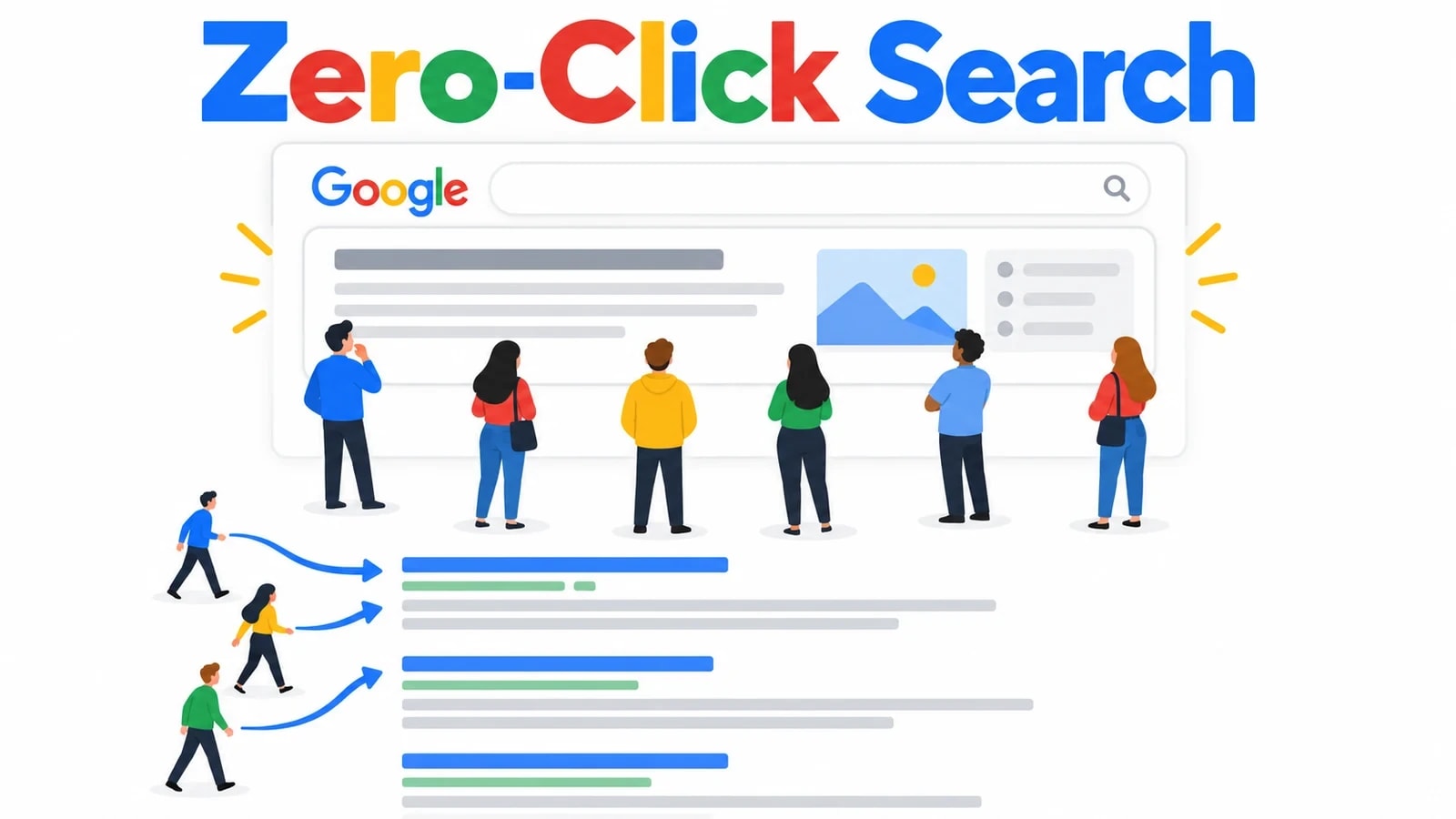
| Answers shown on the results page | Impressions stable or up while clicks fall for informational queries. See our zero-click strategy guide |
| Seasonality | Compare to the same period last year |
| Tracking change | Check GA4 filters, consent banners and tag changes |
Do this by query group and page group. A sitewide drop points to a technical or sitewide quality issue. A drop on one section points to that section's content or intent.
How to show experience and trust
These are changes you can make on the page, without waiting for any update.
Show who is behind the content
- Put a named author on articles where it helps readers, with a short bio that says why they are qualified. Google's guidance frames this as the Who of content creation.
- Add a reviewer for sensitive topics, such as a lawyer or clinician, and say what they checked.
- Keep a clear About page: who runs the company, where it operates, how to contact it.
Prove first-hand experience
- Include original screenshots, photos, data and examples from your own work.
- Describe what you tried, what failed and what you would do differently. Generic summaries are what everyone else, including AI tools, can produce.
- Quote real constraints: timelines, trade-offs, costs that vary and why.
Cite sources and keep content current
- Link to primary sources for facts, standards and regulations.
- Show an updated date, and update the substance and not only the date.
- Remove or correct statistics you cannot support.
Make trust visible
- Real contact details, a physical or registered business address where applicable, clear policies for privacy, returns and terms.
- Genuine reviews on platforms customers use, and clear handling of complaints.
- Secure site (HTTPS), no deceptive ads or hidden affiliate relationships.
What to fix after a traffic drop
- Confirm the date and scope. Match the drop to the Search Status Dashboard and your Search Console data.
- Rule out technical causes before touching content.
- Audit your affected pages honestly. For each, ask: does it say something others do not? Is it written by someone who knows the subject? Does it fulfil the search intent? Would a reader trust it enough to act on it?
- Improve or remove weak pages. Merge thin overlapping pages, rewrite pages that are generic, and remove content with no purpose. Google's people-first guidance names search-engine-first patterns such as summarising others without adding value, writing to a word count and producing content to a template, so those are the pages to look at first.
- Add experience and evidence as above.
- Be patient. Google's core updates documentation says improvements can take time to be reflected, and there is no guaranteed timeline.
Avoid panic moves: deleting everything, rewriting titles sitewide, or buying links. They add risk without addressing the cause.
E-E-A-T and AI-generated content
Google does not ban AI-assisted content. Its guidance on AI-generated content says content is judged on helpfulness and quality, not how it was produced, but using automation mainly to manipulate rankings breaches its spam policies. In practice, content produced at scale with no human experience, review or original input is the kind that tends to look thin. Use AI for drafting and research if you like, then add real expertise, examples and editorial review. Google's Who, How and Why questions are a good test: be clear who created the content, how it was made, and that it exists primarily to help people.
A short E-E-A-T checklist
- Every article has a named author with a real bio.
- Facts are linked to sources and reviewed on a schedule.
- Pages contain something original: data, examples, images, opinions with reasoning.
- Contact, About and policy pages are complete and easy to find.
- Reviews and testimonials are real and attributable.
- The site is fast, secure and free of intrusive ads.
- Thin, duplicate or outdated pages are merged or removed.
Frequently asked questions
Is E-E-A-T a ranking factor?
Not in a direct, measurable way. It is a framework from the rater guidelines for evaluating quality, not a score or an update. Treat it as a guide to what to improve, not a number to chase.
Does adding author bios and schema fix E-E-A-T?
They help, but only if they point to real evidence. A bio that shows genuine experience and links to other work is useful. A generic bio with schema attached does little.
Sources
- Google Search Central, Creating helpful, reliable, people-first content
- Google Search Central, Core updates
- Google Search Central Blog, Google Search and AI-generated content (February 2023)
For the zero-click side of a traffic drop, see our zero-click strategy guide. If you want a second pair of eyes on a drop, talk to us or see our digital marketing service.
Written by the Futurise Solutions team. We use AI tools to help with research and drafting; our team edits each article and checks figures and regulatory details against the sources linked in it. Spotted something wrong? Email us.